

Key Highlights
- Misplaced time and location markers are the most frequent errors in student compositions.
- Incorrect use of measure words often stems from direct translation from English.
- Confusion between different “de” particles (的, 地, 得) affects writing precision.
- Subject-verb-object patterns in Mandarin have specific rules that differ from those in Western languages.
Introduction
Grammar serves as the skeleton of any language, providing the structure that gives meaning to words. That said, for students at a primary school Chinese tuition, mastering Mandarin grammar can be particularly challenging because it follows a logic very different from English. While a student might have a large vocabulary, using those words in the wrong order can completely change the intended meaning or make a sentence incomprehensible. These errors are common and are a natural part of the learning process. However, if left uncorrected, they can become ingrained habits that are difficult to break later on. Identifying these frequent pitfalls is the first step toward achieving grammatical accuracy and clear communication.
Errors in Word Order and Time Markers
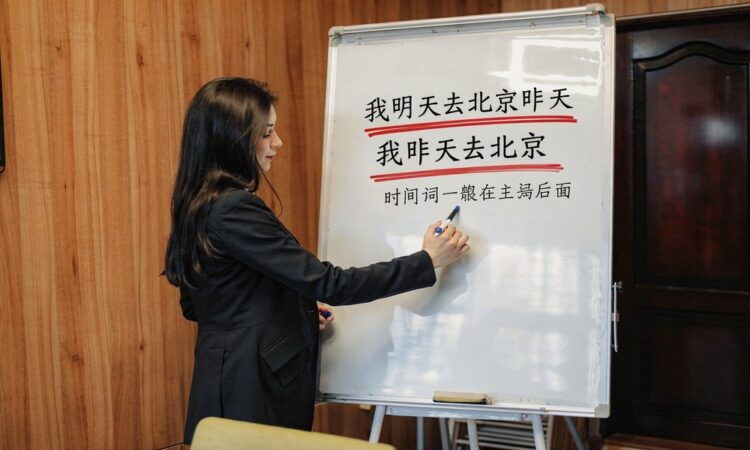
One of the most common mistakes involves the placement of time and location phrases. For instance, in English, we often say, “I went to the park yesterday,” putting the time at the end. However, in Mandarin, the time or location must usually come before the verb. A student might write “我去公园昨天” (I go park yesterday), which is grammatically incorrect. The correct structure should be “我昨天去了公园” (I yesterday went to the park). This reversal of logic frequently trips up bilingual learners. Enrolling a child in primary school Chinese tuition helps reinforce these structural rules through repetitive practice and targeted drills, ensuring that the correct word order becomes second nature.
Incorrect Use of Measure Words
English uses measure words sparingly, such as “a loaf of bread” or “a pair of shoes.” In contrast, Mandarin requires a specific measure word for almost every noun, based on its shape, size, or category. Students often default to using the general measure word “个” (gè) for everything, or they omit the measure word entirely. For example, calling a book “一个书” instead of “一本书” is a common error. While the listener might still understand, it marks the speaker as lacking proficiency. Professional Chinese tuition focuses on helping students memorise the most frequently used measure words and the logic behind them, which is essential for scoring well in both oral and written examinations.
The Confusion of the Three “De” Particles
The three particles 的 (de), 地 (de), and 得 (de) sound identical but serve very different grammatical functions. This topic is a notorious area of confusion for primary students. “的” is typically used for possession or to modify nouns, “地” is used for adverbs to describe how an action is performed, and “得” is used after a verb to describe the result or degree of an action. Students often use “的” for all three situations because it is the most common. Differentiating between these three requires a clear understanding of parts of speech, which is a key focus in primary school Chinese tuition. Mastering these particles is vital for writing sophisticated and accurate compositions.
Direct Translation from English
Many grammatical errors stem from the habit of thinking in English and translating directly into Mandarin. This approach leads to issues with tense markers and the misuse of connecting words. For instance, English speakers use the word “is” (am/is/are) very frequently, but in Mandarin, the verb “是” (shì) is only used to link two nouns, not to link a noun with an adjective. A student might say “它是漂亮” (It is beautiful) instead of the correct “它很漂亮” (It very beautiful). Breaking this habit of direct translation requires immersion and a shift in linguistic perspective. Constant exposure to correct sentence patterns during Chinese tuition sessions helps students move away from English-centric thinking and toward a more natural Chinese flow.
Conclusion
Grammatical precision is what elevates a student’s language skills from basic communication to academic excellence. While common mistakes like word order confusion and particle misuse are expected, they provide valuable learning opportunities. That said, by addressing these errors early through structured lessons and consistent practice, students can develop a strong grammatical foundation. This instance not only improves their exam results but also gives them the confidence to use Mandarin more effectively in everyday life. Remember, with the right guidance and a focus on the unique logic of the language, mastering Chinese grammar becomes an achievable and rewarding goal for every primary student.
Contact LingoAce to help your child master the nuances of Mandarin grammar.


