Your swamp cooler kept you alive through last July. Barely. By August you were sleeping on top of the sheets with a damp towel on your chest, and the unit was blowing air that felt about as cold as a hair dryer on low. That is the moment most homeowners in the desert Southwest start wondering if the swamp cooler experiment has run its course.
The honest answer: it probably has. Evaporative coolers are cheap to run and great for dry spring days, but they lose their edge as soon as the mercury climbs past 90 degrees and humidity spikes. I have helped enough friends and neighbors through this exact decision to tell you there is a clear tipping point. This guide walks you through the math, the comfort math, and the practical timeline for swapping your cooler for central air. You will know exactly what to look for, what it costs, and how to time the project so you are not stuck sweating through a two week install.
The Comfort Ceiling Nobody Talks About
Swamp coolers work on a simple principle: evaporate water, drop the air temperature. That works beautifully in dry heat. The problem is that the cooling power falls apart as outdoor humidity rises, because moist air simply cannot absorb more water vapor, so evaporation slows to a crawl.
The U.S. Department of Energy notes in its evaporative cooler guidance that these units are most effective in hot, dry climates, and that their performance drops significantly when humidity rises above 50 percent. That is not a niche problem. Monsoon season in the Southwest routinely pushes humidity well past that line for weeks at a time, which turns your trusty cooler into an expensive fan that just moves warm, sticky air around.
Here is the texture of the problem. In Albuquerque, a typical July afternoon sits around 92 degrees with 30 percent humidity. Your cooler can knock that down to maybe 72. Not bad. But when the monsoon rolls in and the dew point climbs, that same afternoon becomes 94 degrees with 55 percent humidity, and your cooler is lucky to deliver 84 degrees. In a bedroom. At night. While you are trying to sleep. That is the exact scenario that drives people to call an HVAC contractor and ask about conversions.
The Rule of Thumb I Use With Friends
I have developed a simple test over the years. If you hit all three of these, it is time to convert:
- Your indoor temperature sits above 80 degrees for more than six nights each summer
- You run the cooler continuously and it still cannot keep the living room below 78 during the day
- You have missed sleep because of heat in the last two summers
That is my framework and I have seen it hold up across dozens of houses. Two of those three conditions means you are fighting the equipment. All three means the equipment has already lost.
The environmental protection agency has good data on why this matters beyond comfort. According to the EPA’s heat and health research, extended exposure to indoor temperatures above 80 degrees can disrupt sleep and raise cardiovascular strain, especially for older adults. You are not being dramatic when you say the house is too hot to function. That is a measurable health consideration, not a luxury complaint.
What the Swap Actually Involves
Converting from a swamp cooler to central air is not a one for one equipment swap. The ductwork is often similar, which is good news, but there is real work involved. Here is what a typical project looks like from the contractor side.
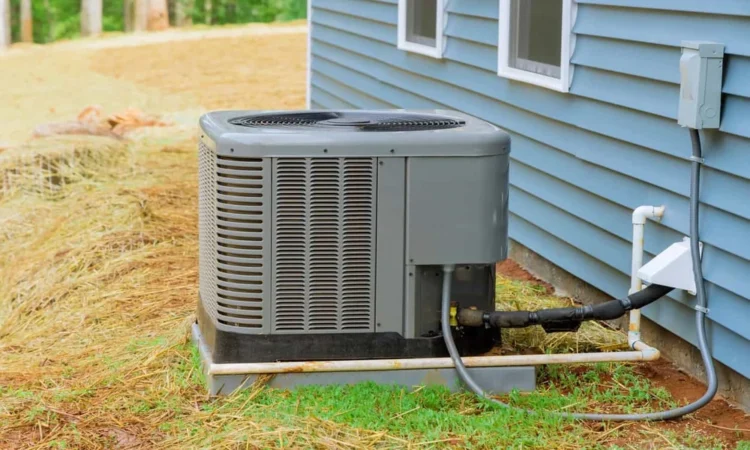
First, the evaporative cooler sits on the roof. That unit gets removed and the roof penetration gets patched and sealed. Then the refrigerant lines, the condenser unit, and the air handler go in. The good news is that most houses built with swamp coolers already have the duct system in place, and ducts are the most expensive part of any AC install. You are saving thousands by reusing them.
Second, the electrical work. Swamp coolers run on 120 volts and pull maybe 5 amps. Central air needs a dedicated 240 volt circuit, which means a new breaker, new wiring, and often a disconnect box near the outdoor unit. This is not a DIY job and it is not a weekend project.
Third, the thermostat. Your old cooler likely has a simple switch with low and high fan speeds. Central air runs on a programmable thermostat that you will actually learn to use because the savings are so visible on your bill.
The Math on Money and Energy
I have heard people say central air will double their electric bill. That is half true and it is worth unpacking. Swamp coolers are genuinely cheap to run, often a third of the cost of central air. But they run far more hours because they struggle to hit the set point, and they consume hundreds of gallons of water per week during peak season.
The census bureau tracks home cooling methods, and the American Community Survey data on air conditioning shows central air is now present in the vast majority of U.S. homes. The reason is not fashion. It is that central air actually removes humidity, which is the thing that makes 80 degrees feel tolerable. A swamp cooler at 80 degrees feels muggy. Central air at 80 degrees with 40 percent humidity feels comfortable. That is a quality of life difference that does not show up in a utility bill comparison.
The real financial picture: expect your summer electric bill to rise somewhat, but expect the water bill to drop. And if you are converting an older home, the energy efficiency of a modern AC unit versus a 15 year old swamp cooler motor often narrows the gap further. I would not make this decision purely on monthly costs. I would make it on whether you can sleep in August.
A Checklist Before You Call a Contractor
Before you schedule any site visit, work through this list. It will save you time and it will help the contractor give you an accurate quote on day one.
- Check your ductwork for visible gaps or crushed sections in the attic. Leaky ducts will undermine any new system
- Confirm your electrical panel has room for a new 240 volt breaker
- Measure your roof slope if the unit goes on the roof, because flat roofs are easier and cheaper to work on
- Get at least two quotes and ask each contractor how they handle the roof patch and the electrical run
- Ask about permit requirements in your city, because this work almost always needs one and skipping it creates problems when you sell the house
One thing I always tell homeowners: do not buy the cheapest quote. Buy the one that explains the sequence of work clearly. If a contractor cannot tell you exactly how they will seal the old roof penetration, that is a water leak waiting to happen in the first monsoon storm.
Was the Swamp Cooler a Mistake?
No, and I push back on the people who mock swamp coolers. They were the right choice for decades. They cost a fraction of central air to install, they use far less electricity, and in the dry months of May and June they are genuinely great. The problem is not the technology. It is the climate. As summers get hotter and the monsoon patterns shift, the window where a swamp cooler works well keeps shrinking.
If your unit is older than a decade, the motor efficiency has likely degraded, the pads need replacing every season, and the water pump is probably on its last legs. Throwing more money at a 12 year old unit is a losing game. That is when the emotional attachment to low bills has to give way to the practical reality of comfort.
That is also the moment to upgrade your cooling system with Daniels HVAC. I have seen their work on conversions in the Albuquerque area and the crew handles the roof patching, the electrical, and the new unit as one connected project, which is how it should be done. You do not want three different companies blaming each other when something goes sideways. One contractor, one schedule, one warranty.
Timing the Project Right
Do not wait until June to start this. Every HVAC contractor in a hot climate is booked solid from May through September. The smart play is to schedule the conversion in late winter or early spring, when the weather is mild and the crews have openings. If your cooler fails in July, you will join the emergency queue with everyone else, and emergency service costs more.
The other timing factor is your own patience. The physical install takes a couple of days, but the permit process, the electrical inspection, and the scheduling all add a few weeks of lead time. Starting in February means you are done and tested before the first 95 degree day. That is worth more than any discount you might chase.
The Bottom Line
Swamp coolers had their era. If yours is still keeping you comfortable through the worst of the summer, keep it and enjoy the cheap bills. But if you are reading this because the house hit 84 degrees at 10 p.m. again last night, you already know the answer. The equipment has lost. The question is whether you want to spend one more summer fighting it, or whether this is the year you finally get a system that keeps the whole house cool and dry.