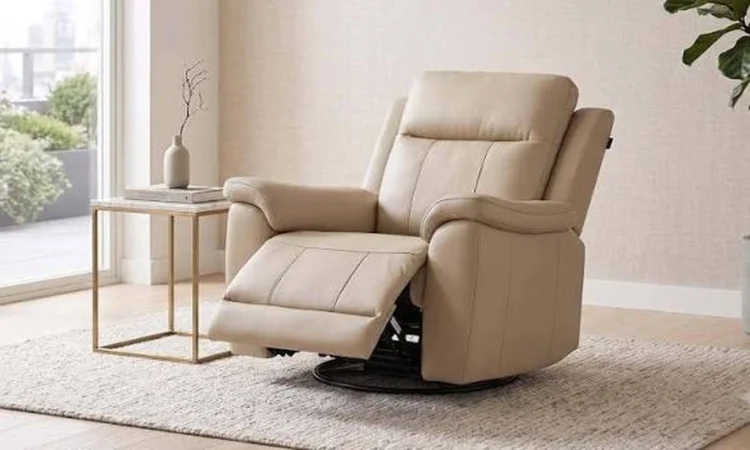
Most people buy a recliner because it feels great in the showroom, then get it home and discover it swallows half the walkway to the kitchen. The chair was never the problem. The room was. A recliner that fits your body but not your floor plan turns into an expensive obstacle you trip over every morning.
So here’s the fix, and it’s simpler than you’d think. You measure three distances before you ever sit down in a showroom. Then you match the chair to those numbers instead of to how plush the cushions feel. Shoppers looking at recliners in Greer, SC tend to focus on fabric and color, which are the two things that matter least once the chair is wedged against a wall. Get the dimensions right and everything else gets easier.
This guide walks you through the measurements, the mechanism types, and the mistakes I see people make over and over. You’ll finish knowing exactly what to look for and what to walk away from.
Why Recliners Fail in Real Living Rooms
Recliners get returned for one reason more than any other: they don’t fit the space once they’re fully reclined. A chair that looks compact when upright can add two feet of depth the second you kick the footrest out. That’s the version your room actually has to live with, not the tidy upright one.
I’ve watched people measure their living room, buy a chair that fits that measurement perfectly, and still end up with a recliner jammed three inches from the coffee table. They measured the
chair at rest. Nobody sits in a recliner at rest.
Here’s the part that throws people off. Manufacturers list a “wall clearance” number, and it’s usually a best-case figure measured with the chair pushed as close as the mechanism technically allows. Real rooms have baseboards, curtains, and a lamp cord you forgot about. Add a few inches to whatever the tag says and you’ll be closer to the truth.
Measure These Three Distances First
Before you look at a single chair, grab a tape measure and write down these numbers. You’ll use all three at the store.
- Wall to the front of where the chair will sit. This tells you how much reclined depth you can afford.
- Clear walking path. Leave at least 36 inches between the chair and any doorway or high-traffic route. Hallways and entryways are where recliners cause the most trouble.
- Seat width you actually need. Sit in a chair at home, then measure from the outside of one hip to the other and add two inches. That’s your floor.
Those three numbers narrow the field fast. If your wall-to-front distance is 62 inches and the chair you love needs 68 fully reclined, you don’t have a chair, you have a future argument with your partner about the walkway.
Measure the room at the same time of day you’d normally use the chair. Sounds fussy. It isn’t. Afternoon light changes how much open floor you perceive, and a chair that feels roomy at noon can feel cramped at night when the lamp and side table are both in play.
Which Recliner Mechanism Belongs in Your Room?
There are three you’ll run into, and each one solves a different problem.
| Mechanism | Wall clearance needed | Best for |
|---|---|---|
| Standard push-back | 18 to 20 inches | Large rooms, traditional setups |
| Wall-hugger | 6 to 8 inches | Rooms where the chair faces a wall |
| Power lift | 10 to 14 inches | Anyone who wants help standing up |
If your chair backs up to a wall or a window, a wall-hugger is almost always the right call. It slides forward as it reclines rather than pushing the backrest into the wall. You give up a little bit of the full lay-flat feel and gain back a foot of floor space. Worth it every time in a small room.
Push-back mechanisms feel the most natural to me. There’s no lever, no motor, no hum. You lean and the chair follows. The tradeoff is that they need real room behind them, so they’re a poor fit for apartments or tight corners.
Power lift chairs cost more, but they solve a problem nothing else does. If getting out of a low seat is a struggle for you or someone in your house, that motor is the whole point of the purchase. Furniture retail employs millions of Americans, and according to the Bureau of Labor Statistics, the industry keeps evolving to serve an aging population that wants to stay in their own homes. That shift shows up in the chairs themselves.
Fabric, Frame, and the Stuff Salespeople Skip
Fabric is the easiest thing to get right and the thing people agonize over most. Pick based on who actually sits in the chair. A household with a golden retriever and two kids under six needs a tight-weave performance fabric or leather, full stop. A retired couple who uses the chair for reading can get away with something softer that wouldn’t survive a single muddy paw.
Frame material matters more than anyone tells you. Kiln-dried hardwood holds up for years. Particle board flexes and starts creaking within a season, especially under the repeated load of a reclining mechanism. Ask what the frame is made of. If the answer is vague, that’s your answer.
Then there’s the mechanism itself, the metal parts that do the actual work. Cheaper chairs use thinner steel and looser tolerances, which is why they wobble after a year. You won’t see this in a showroom demo because the floor model gets treated gently. Sit in it, push it all the way back, and listen. Squeaks on day one don’t improve.
One more thing people overlook: accessibility. The Americans with Disabilities Act sets clear expectations for clear floor space in public settings, and those same principles make sense in your own home. A recliner that blocks the only path through a room isn’t just inconvenient, it’s a hazard for anyone using a walker or wheelchair.
The Showroom Test I Always Run
When you finally sit down in a candidate, don’t just lean back for ten seconds and nod. Run this sequence, in order, on every chair you’re considering.
- Sit down the way you actually sit at home. Feet up, phone out, one leg crossed. Not the polite way you sit when someone’s watching.
- Recline fully and stay there for two full minutes. Pressure points show up in the second minute, not the first.
- Check where your head lands. If the headrest hits your neck instead of the base of your skull, the chair is the wrong height for you.
- Stand up without using your arms. If you can’t, you’ve found your mechanism mismatch.
- Look behind you. Are you within a few inches of the wall the chair would actually sit against?
That last step catches more bad purchases than the other four combined. It’s the difference between a chair that works in the showroom and one that works in your house.
I’d also add a quick safety check on anything with a motor or moving parts. The Consumer Product Safety Commission tracks recalled furniture and publishes that information for consumers, so a thirty-second search before you buy is cheap insurance.
Getting the Details Right Pays Off
Fit beats features every single time. Measure your three distances, match the mechanism to your wall clearance, and test the chair the way you’ll actually use it. Do those three things and you’ll skip the return trip and the buyer’s remorse.
One last thought. A recliner is one of the few pieces of furniture you’ll sit in daily for a decade or more, so it’s worth the extra twenty minutes of measuring. Where in your home is the chair going, and does the space you’ve picked actually give it room to lean back?